GMRS Radios For Backup Emergency Communications
Imagine, for a minute, a complete communications blackout. There are no working landlines. You can’t call 911, the police department, or the fire department. Your cell phone is completely dark because the cell towers themselves have been damaged. Then the electricity goes off, and the power grid is down for days on end.
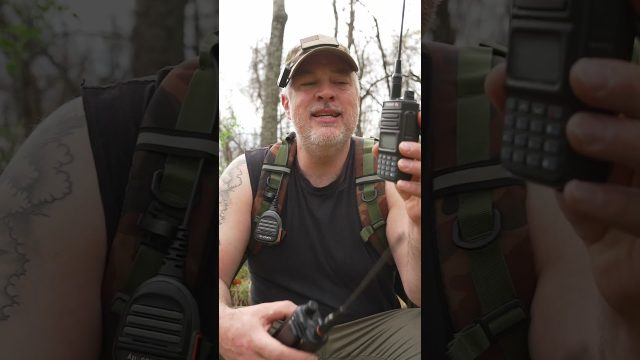
That’s not some hypothetical doomsday scenario, folks — that’s exactly what happened during Hurricane Helene in Tennessee and parts of North Carolina. No communications, no electricity, a complete disaster area. When search and rescue teams (myself included) went down there looking for survivors, we relied heavily on GMRS radios as our primary means of communication. In this post, I want to break down what GMRS is, why it matters for emergency preparedness, and how you can get set up with it quickly and cheaply.
What Is GMRS, and Why Does It Matter?
GMRS stands for General Mobile Radio Service. It’s a licensed radio band designed for short-distance, two-way communication between family members, groups, or communities. Unlike ham radio, GMRS doesn’t require you to pass a technical exam — you simply apply for a license through the FCC (Federal Communications Commission), pay the fee, and you’re authorized to transmit.
Why does this matter during a disaster? Because when cell towers go down and the power grid fails, your phone becomes a useless brick. No calls, no texts, no internet. In a true grid-down or infrastructure-collapse situation like what happened during Hurricane Helene, GMRS radios become a lifeline. They let you communicate with your family, your neighbors, or a search and rescue team without depending on any centralized infrastructure at all.
Here’s the harsh reality: if you can’t call out for help, nobody knows to come help you. And on the flip side, if you don’t have a radio to listen for other people calling for help, how are you supposed to go help them? Communication is a two-way street, and in a disaster, it can be the difference between life and death.
Step 1: Get the Right Radio
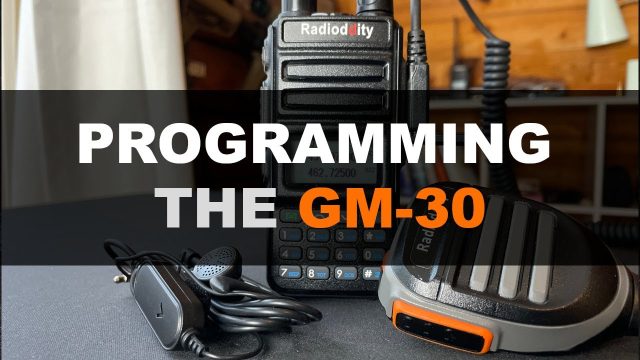
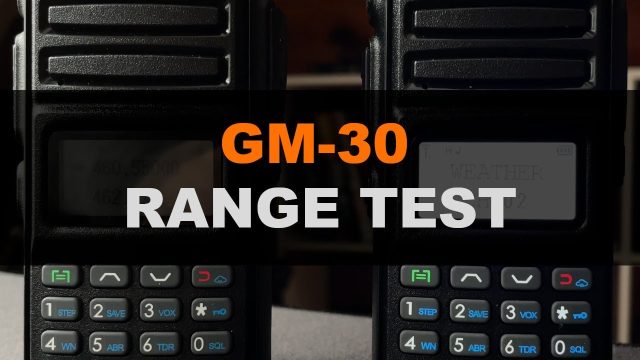
The good news is that GMRS radios are very affordable. I recently picked up a GM30 Plus for about $35 on Amazon. If you want a two-radio kit, you can typically find those for around $60. Both Baofeng and midland-style brands (Baofeng radios in particular) have a solid reputation in the prepper and emergency communications community, and they’re reliable enough to genuinely save your life in a bad situation.
When choosing a radio, look for one that supports the GMRS frequency range, has decent battery life, and ideally has a way to charge it independently of the grid — a solar charger or a hand-crank charger, for example. Since you may be operating in a scenario where the power is out for days, having a way to keep your radio charged is just as important as the radio itself.
Step 2: Get Your License
One of the best parts about GMRS is how easy it is to get licensed. There’s no test required — unlike amateur (ham) radio, which requires passing an FCC exam. All you have to do is apply online, pay a fee (currently around $30), and you’ll receive a 10-year license directly from the FCC. That license comes with your own dedicated call sign, and it actually covers your entire immediate family, meaning your spouse and children can use the radios under your license without needing to get their own.
Once you have that license in hand, you’re legally authorized to transmit on GMRS frequencies, and you’re ready to start using your radio for emergency preparedness.
Step 3: Practice Before You Need It
Don’t just buy the radio and toss it in a closet. Take time now, while things are calm, to learn how to use it. Learn how to change channels, how to use repeater channels if your radio supports them, and how to communicate clearly and efficiently. Practice with your family members so everyone knows the basic protocols — things like using clear language instead of codes, confirming messages were received, and keeping transmissions short.
The middle of a disaster is not the time to be reading an instruction manual for the first time.
Final Thoughts
If you’re looking for a quick, affordable, and legitimate way to get into emergency communications, GMRS radio is one of the best entry points out there. It’s inexpensive, the licensing process is simple, and it can genuinely be the difference between getting help and being stranded when disaster strikes.
For more prepping tips on emergency preparedness and SHTF (Sh*t Hits The Fan) situations, don’t forget to hit subscribe and like the video. I’ll see you in the next one.