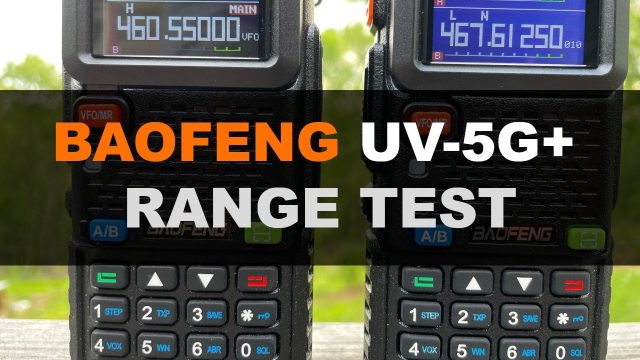
Baofeng UV-5G Plus GMRS Radio Range Test: How Far Can It Really Reach?
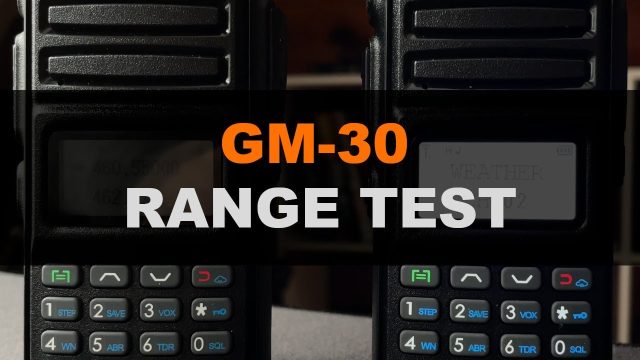
Today my wife and I put the Baofeng UV-5G Plus GMRS handheld radios through a real-world range test. GMRS stands for General Mobile Radio Service, a licensed radio band commonly used for family, off-road, and emergency communication. We ran the same checkpoint route we’ve previously used to test the Rugged Radios GM30, so we’d have a solid baseline for comparison and a better understanding of the outer limits of these radios in case we ever need them in an emergency.
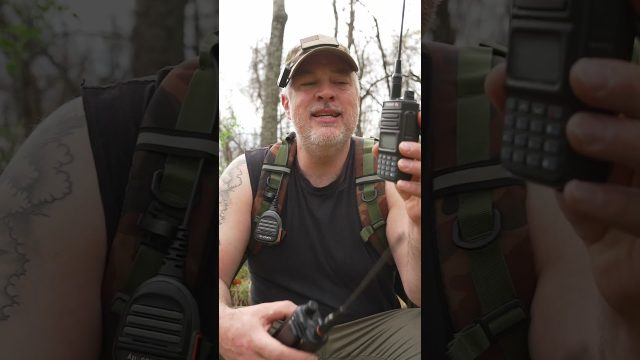
For this test, we kept things simple and used the standard 15-inch whip antenna that comes stock with most handheld radios — no upgrades, no external antennas, just the radios as they come out of the box. My wife drove to a series of checkpoints while I stayed on the second floor of our cabin, which is where we always run these tests from since it mimics a realistic base station setup. She checked in at every checkpoint as she drove, giving us a play-by-play of signal quality along the route.
Setting Up the Test
Before heading out, we identified checkpoints four and five as the ones to watch closely. These were the exact spots where the Rugged Radios GM30 struggled the most on our previous test, thanks to a mix of elevation changes, terrain, and — most notably — a set of large high-voltage power lines running between the cabin and those checkpoints. Power lines are notorious for causing radio frequency interference, so we wanted to see if the Baofeng UV-5G Plus could cut through that noise any better than the GM30 did.
My wife started near the mailboxes at the bottom of our route so we could do an initial radio check, then worked her way out to each checkpoint, calling in over the radio each time she arrived and again when she moved on to the next spot.
Checkpoints One Through Three: Loud and Clear
The first few checkpoints went off without a hitch. Communication was clear, readable, and consistent — using radio lingo, she was coming in “Lima Charlie” (loud and clear) the entire time. This gave us a good baseline before things got more challenging with distance and terrain.
Checkpoint Four: The First Real Test
Checkpoint four, near a local convenience store, was one of the spots that gave the GM30 radios trouble during our previous test — they didn’t get clear reception at all here. This time, with the Baofeng UV-5G Plus, communication was noticeably better. We were both able to hear each other clearly, which was already a promising sign heading into the tougher checkpoints.
Checkpoint Five: Fighting Through the Power Lines
This next stop was the big question mark. Between the cabin and this checkpoint sits a set of major high-voltage power lines — the “big boy” transmission lines, not just your average utility pole. These lines run almost at eye level with the cabin from where my wife was positioned, and they caused a lot of interference during our previous GM30 test.
With the Baofeng UV-5G Plus, we did pick up some squelch (that staticky, broken-up sound you get with a weaker signal), but overall communication was still better than what we experienced with the other radios at this same spot. It wasn’t perfect, but it was a clear improvement.
Pushing the Distance Further
We decided to push things even further to see where the radios would eventually give out. My wife continued on, getting some elevation and putting more distance and terrain between us. At this point we started running into some real limitations — there was a stretch where communication dropped out entirely and we weren’t able to connect at all.
Interestingly, when she reached a high point near a local church (which, as it turns out, would actually make a great central meeting location for our family in a real emergency), the results were mixed. She was able to hear me, but I couldn’t make out what she was saying on my end. It seemed like the issue was more related to reception at the cabin than an issue with her radio or her signal strength.
The Verdict on Range and Clarity
Even with that one weak spot near the top of the route, the results were clear: checkpoints four and five, which had been problem areas for the Rugged Radios GM30, were handled noticeably better by the Baofeng UV-5G Plus. My wife said she preferred these radios over the GM30s overall, mainly because the audio was clearer and the radios seemed to cut through the interference from the power lines much better than expected. That 2.86-mile checkpoint in particular — which had given us trouble before — performed impressively well this time around.
It’s worth noting that if we were using a full base station setup with a roof-mounted antenna instead of two handheld radios, we likely wouldn’t have run into any communication issues at all. But for two basic handhelds with stock antennas, we walked away genuinely impressed.
One Minor Downside: No Built-In Weather Channels
If there’s one nitpick with the Baofeng UV-5G Plus, it’s that it doesn’t come with pre-programmed weather scanning channels like some other radios do. Weather channels broadcast continuous updates from your regional emergency alert system, and having them built in as their own memory bank makes it easy to just scan through and find a clear one, especially when traveling somewhere new.
That said, this isn’t a dealbreaker. You can manually program in the frequencies for your region’s weather alert stations without much hassle, and once they’re saved, you’re good to go. Given the trade-off, we’ll gladly take the improved range and clarity over having weather channels pre-loaded.
Final Thoughts
Going into this test, I honestly wasn’t confident we’d get any usable communication at checkpoints four and five given how much trouble we had there previously. The Baofeng UV-5G Plus exceeded our expectations, especially when it came to pushing through interference from those major power lines.
Since these are brand new radios, our next step is to dig into the settings, test out privacy codes, and run them through our usual thorough check before putting them into regular use. As always, we like to fully vet our gear before relying on it for real-world emergency situations.
That wraps up this range test. Hope this helps if you’re considering the Baofeng UV-5G Plus for your own emergency comms setup, and I’ll see you in the next video.