Has Signal Messenger Been Compromised or Hacked? Debunking the Misinformation
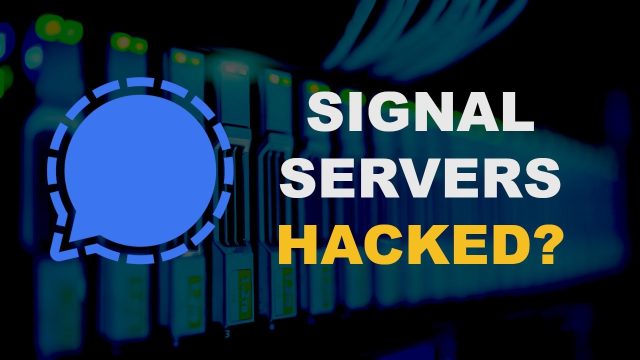
There’s one thing I really, really dislike: when people post blatantly false information online, especially information that can actually hurt people. Now, they may think they’re doing folks a favor by posting things like this, but the reality is these kinds of falsehoods do far more harm than good. I was recently sent a link to an article titled “Signal Compromised: What to Know,” and in it, the author describes Signal as being completely insecure and completely compromised.
I want to walk through this article with you so I can point out the absolute falsehoods it contains, while also giving you the actual truths buried underneath the fear-mongering. Signal is one of the most widely trusted end-to-end encrypted messaging apps out there, so when misinformation like this spreads, it can genuinely put people’s privacy and security at risk by making them distrust a tool that’s actually protecting them. Let’s break it down.
The False Claim: “Signal Has Disclosed It Was Compromised”
Right from the start of the article, the author makes a boldfaced lie, stating that “Signal Foundation has disclosed that its Messenger system has been compromised, leaving millions of accounts exposed.” Understand what’s being claimed here: the author is saying Signal Foundation itself made an official statement disclosing that its system had been compromised. This is completely false.
In fact, the article even includes a screenshot of Signal’s own statement, which reads: “To be clear, Signal’s encryption and infrastructure have not been compromised and remain robust.” The author includes the very evidence that disproves their own claim.
The “All Signs Point to the Russians” Theory
The author continues, writing “all signs pointing to the Russians.” Folks, there is zero evidence that Russian actors compromised Signal’s infrastructure, because Signal itself has not been compromised. This is just another theory built on top of another falsehood. We need to stop blaming foreign governments for the incompetence of end users who fall for phishing scams or fail to secure their own devices.
“Signal Has Never Been Secure”
The article goes on to say, “Signal is not and has never been secure despite what the marketing tells you, along with the criminally stupid parrots or bad faith actors you’ll find online.” Folks, the only bad faith actor I’m seeing here is the author of this article, who is spreading obvious, provably false information — clearly written by someone with little to no real experience in technology, cybersecurity, networking, or infrastructure.
Here’s the truth: Signal is open-source, meaning its source code is publicly available for anyone to inspect. Cybersecurity professionals around the world regularly audit Signal’s code, and it is consistently recommended by security experts precisely because of this transparency.
“It Just Claims End-to-End Encryption”
Further down, the author writes that Signal’s “primary draw has been convenience. It claims end-to-end encryption.” End-to-end encryption (E2EE) is a method of securing communication so that only the sender and recipient can read the messages — not even the service provider in the middle can access the content. No “claim” is needed here. Because Signal is open-source and has been independently audited by numerous third-party security firms, its encryption implementation has been verified repeatedly, not just marketed.
The “Government Built It” Conspiracy
The article also pushes the angle that “the government made it” because “their own assets built it.” This is simply not true. Signal was built by Open Whisper Systems, not any government agency. It’s true that Signal received funding from the Open Technology Fund, but so have many other security tools and companies that we use and trust every day. Receiving grant funding is not the same as being built or controlled by a government.
Attacking Signal’s Leadership
If you’re an engineer or cybersecurity professional who likes Signal, don’t feel alone in being attacked — the article’s author also goes after the Signal Foundation’s chair, Katherine Maher, claiming she is a “CIA spook.” Katherine Maher leads the nonprofit organization behind this secure and private messaging app. She’s also the CEO of NPR, and as a public figure, she voices opinions online that not everyone agrees with. But having controversial or unpopular opinions doesn’t make someone a deep-state operative running around intercepting everyone’s internet traffic to see what cat pictures you’re sending to grandma. This is just another baseless conspiracy theory, not a fact.
Now, Let’s Talk About What’s Actually True
I’m done picking apart the lies — let’s get into the parts of the article that actually have some truth to them.
Signal Does Require a Phone Number
The author correctly points out that Signal requires a phone number to register and use the app, and that this phone number is part of the metadata that could potentially be exposed to a government through a subpoena or other legal means. This part is true. Signal does collect your phone number, the date your account was created, and the last date you connected to Signal’s servers.
What Signal does not collect is who you’re talking to. Signal cannot see your contacts, your conversations, or any content you send — including text, pictures, video, or video calls. So while the government could theoretically learn that you use Signal and when you last connected, they cannot see who you’re communicating with or what you’re saying.
Signal Runs on Amazon Web Services (AWS)
Another accurate point: Signal’s servers run on Amazon Web Services (AWS), Amazon’s cloud computing platform. This is 100% true. But to be fair, the author’s own website runs on Shopify, which is hosted on Google Cloud — and if you’re getting into the nitty-gritty of privacy comparisons, Google Cloud arguably has a worse privacy reputation than AWS in some respects.
Here’s the bigger point: every online service has to host its servers somewhere, whether on a physical server or a virtual private server, and that almost always means using one of a handful of major cloud providers. Hosting with a company like Amazon doesn’t mean that company has full access to read or intercept your data. The author implies this, but it’s misleading — hosting infrastructure and data access are two very different things.
So What’s Really Behind These “Signal Attacks”?
Now let’s get to the meat and potatoes of what’s actually happening with these so-called Signal attacks: phishing.
Phishing is when attackers try to trick you into handing over sensitive information — like usernames, passwords, or PIN codes — usually by sending fake emails or messages pretending to be from a trusted source. For example, you might get an email that looks like it’s from your bank, asking you to click a link and enter your login details. That link leads to a fake website designed to look identical to your bank’s real site. Once you enter your credentials there, the attacker now has them and can log into your actual bank account.
This is a critical distinction: phishing attacks exploit human trust, not weaknesses in Signal’s encryption or infrastructure. A successful phishing scam against a Signal user is not the same thing as “Signal being compromised.” Confusing the two is either a sign of ignorance or an intentional attempt to mislead readers.
The Bottom Line: Always Fact-Check What You Read
If there’s one takeaway I want you to walk away with today, it’s this: fact-check the information you read online, especially when it comes to security and privacy tools you rely on. There is plenty of reliable information out there about Signal from real cybersecurity professionals who work in this field every single day. I encourage you to trust, but verify, anything you read, because articles like this one do significantly more harm than good for the general public.
Here’s the reality: no messaging app will ever be 100% foolproof. Right now, Signal’s systems are extremely secure and robust, but the weakest link will always be the end user — the person using the app, and the people they’re communicating with. Human error, not encryption failure, is what truly exposes your data.
Thanks for reading, and I’ll see you in the next one.