Introduction to GMRS Radio Communications
When Hurricane Helene tore through Virginia and into the mountains of Tennessee, I lost all communication with my brother and his wife. The destruction was widespread, and I couldn’t get through to them by any conventional means. I even had to call a neighboring 911 center just to piece together what was happening in their area.
That’s when I dropped everything, called my brother-in-law, and we threw together a plan to head down and make sure they were okay. One of my key responsibilities was putting together our communication package, which turned out to be simpler than you might think: two GMRS radios.
Watch Here: https://www.youtube.com/watch?v=7VcLECm5cnI
Why Communication Matters in Emergencies
Having a solid communication plan is essential if you’re going to participate in any kind of search and rescue operations during an emergency. It’s also critical for your own survival and that of your family.
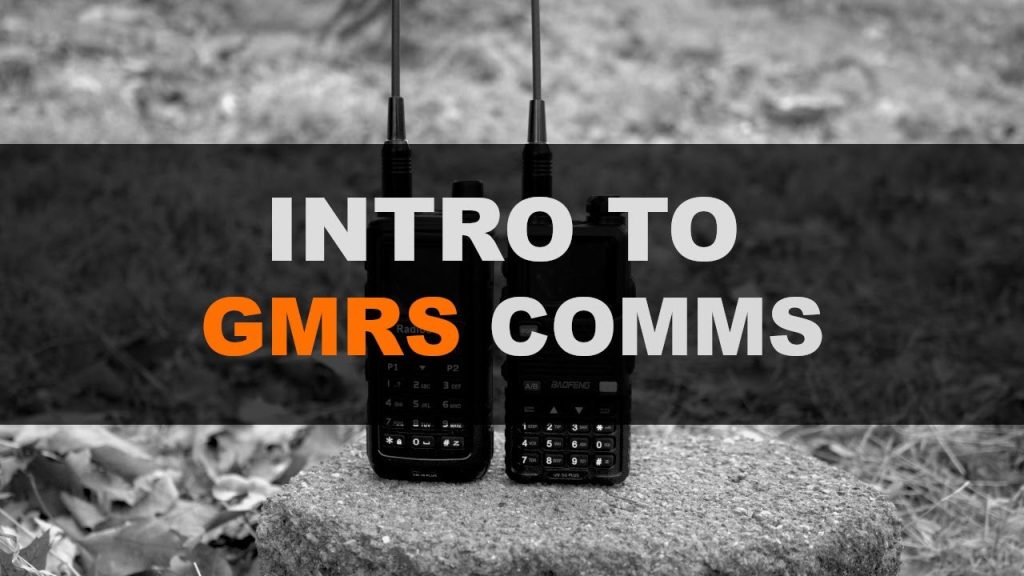
We used Radioddity GM-30 radios, which are fairly inexpensive and available on Amazon. They’re comparable to Baofeng radios—just typical handheld GMRS units. I had the radios pre-programmed, and we used them to communicate while digging and cutting with chainsaws, making our way down the road where my brother lived.
These radios weren’t just convenient—they were essential. We often weren’t in visual range of each other. I was hiking deeper onto the road, scouting ahead and marking areas that needed clearing, identifying neighbors who needed help, particularly elderly folks. I was essentially prioritizing who my brother-in-law and nephew should dig out while I continued the search. The radios allowed us to move and communicate very efficiently.
What really drove home their importance was when we received an NOAA alert through the radio. We were scanning the NOAA weather channels when an alert came through about a potential dam break—and we were downriver from that dam. That information was critical. If that dam had broken, it could have put us in a seriously dangerous situation.
What is GMRS?
GMRS stands for General Mobile Radio Service. It’s a licensed radio service, which means you need to pay $35 for a license that lasts 10 years. The reason for this licensing is that GMRS allows you to transmit at much higher power levels than FRS (Family Radio Service) radios you’d typically buy at Walmart.
FRS radios communicate and transmit at much lower power—around 0.5 to 2 watts. With GMRS, you can use significantly more power. The higher the wattage, the greater the distance you can transmit.
Essential GMRS Terminology
Let me walk you through some basic terminology to help you get started with GMRS communications.
Squelch
Squelch is an adjustable setting on most radios that mutes background noise on incoming transmissions. Essentially, it controls how much static you want to allow with the communication coming into your radio.
If someone is deep in the mountains trying to communicate with you, you might hear a lot of static. You might not even hear them at all if your squelch setting is too high, blocking out background noise entirely.
Think of it like those old television sets. You’d turn the knob through static until you got a signal—the stronger the signal, the less static you’d hear. Squelch filters that out.
In a scenario where someone is deep in the mountains trying to reach you, you might need to turn your squelch off, hold your radio up, and really listen to see if they’re trying to communicate. I usually keep my setting around three, which seems to be a good everyday setting.
Channel Mode vs. Frequency Mode
All the radios I’ve used—Retevis and Baofeng handhelds—have two main operating modes.
Channel Mode is your most common mode. This is where you plug in a typical channel. On GMRS, you have 30 channels. Channels 1 through 22 are your standard channels. You’d set up, say, channel 17 on one radio and channel 17 on all the other radios so you can communicate with one another. Channels 23 through 30 are pre-programmed repeater channels, which we’ll get to later.
Frequency Mode allows you to use the keypad on the radio to type in a specific frequency. This could be a ham radio frequency, fire/EMS frequency, or just about any typical frequency in use. While you won’t be able to communicate on those frequencies with most GMRS radios, you will be able to listen in.
When I was down in Tennessee and North Carolina, I plugged in frequencies for local fire and EMS so I could hear what was going on. I was also able to tune into a ham radio repeater channel in North Carolina and listen to communications to understand the situation. It came in very handy.
For most users, channel mode is where you’ll spend most of your time. It’s simple and gets you communicating right away.
CTCSS and DCS (Privacy Codes)
CTCSS stands for Continuous Tone-Coded Squelch System, and DCS stands for Digital-Coded Squelch. These are what we call privacy codes.
Here’s how they work: If I program all my radios to channel 17, anyone with a radio on channel 17 can communicate with us and listen to our communications. They could even interrupt us.
However, if I add a CTCSS or DCS code, only people with those codes can easily communicate with us. When I broadcast on channel 17 with a privacy code, the radio also broadcasts a tone you can’t hear, which opens up the speakers on other radios that have the same code.
Someone on channel 17 without the code can still listen to us, but we won’t be able to listen to their broadcast unless they know which one we’re using. Since there are around 30 codes, they could potentially guess, but most people aren’t out there trying to interrupt other people’s communications.
These codes allow you to fine-tune your channel so that only your group can easily broadcast and communicate on that channel.
NOAA Weather Radio
All these radios come with NOAA built in. There’s a button you push to turn it on and start scanning for NOAA broadcasts. And NOAA is more than just weather—we received emergency alerts and all kinds of critical information while driving through the hurricane zone to Tennessee and North Carolina.
Repeaters
Repeaters allow you to extend your communication range significantly. A repeater listens on one frequency and transmits on another.
You could have a base station—or even a handheld radio with repeater capability—set up high on a mountain somewhere. Program it to receive a transmission on one frequency and broadcast out on another, effectively repeating the signal.
When you talk on a regular channel like channel 17, you’re sending and receiving on the same frequency. With repeater channels, you’re transmitting on one frequency and listening on another, which extends your range considerably.
I might only be able to reach 5 miles with my handheld, but if that repeater is 4 miles away and it’s powerful enough, it could broadcast out 50 or even 100 miles depending on line of sight. Using a local repeater with just my five-watt handheld radio, I was able to talk to someone 70 miles away.
You can usually find repeaters in your area pretty easily online.
Antennas
I like to keep things simple. I purchase my antennas online, pre-made. You can get as technical as you want and make your own antennas, but I prefer buying them ready to go.
You can get special mounts called NMO mounts that allow you to screw an antenna onto a pre-installed base. There’s a wide selection of these antennas available, and they plug right into the back of the radio.
I use a dual-band antenna that I purchased for under $30 on Amazon. This is the antenna I use on my roof with my mobile unit, which serves as a base station at my cabin.
Keep It Simple
You can get as deep as you want with communications. You can go down the rabbit hole and get super technical, but when it comes to an emergency, you want a simple plan.
GMRS lets you keep it simple. Plug in the channel you want to use, set the privacy codes you want on that channel, make sure those are configured on all the radios you’re using, and you’re good to go. No fuss, no muss.
Keeping it simple in the field is really important. You don’t want to be messing around with technicalities when lives might be on the line.
Whether you’re preparing for natural disasters, coordinating search and rescue operations, or just want reliable communication for your family during emergencies, GMRS radio is an accessible and effective solution that anyone can learn to use.
Stay consistent, be diligent, and stay prepared.