Introduction to GMRS Radios for Emergency Communication
During Hurricane Helen, I got a real-world reminder of why simple, reliable communication matters.
As the storm pushed through Virginia and into the mountains of Tennessee and North Carolina, I lost communication with my brother and his wife. Reports were coming in about major flooding, broken power poles, and road washouts. Swift water rescues were underway. Backwater effects were causing significant flooding, in some places over four feet deep near critical bridges.
I even had to call a neighboring 911 center just to understand what was happening in their area.
That’s when I decided to head down there but before I left, I made sure we had a communication plan.
Click here to watch on YouTube.
Why Communication Is Critical During Emergencies
When you’re operating in a disaster zone, cutting fallen trees, clearing roads with chainsaws, hiking ahead to assess damage, you can’t rely on cell service. It may be down. Towers may be overloaded. Power may be out.
While helping clear my brother’s road, we often weren’t even in visual range of one another. I was hiking ahead, marking houses that needed help, especially elderly neighbors, while my brother-in-law and nephew followed behind cutting access paths.
Our radios allowed us to:
- Coordinate efficiently
- Prioritize
- Stay aware of changing conditions
- Protect ourselves
At one point, we received a NOAA alert warning of a potential dam failure downstream from where we were operating. That information alone could have saved our lives. Communication isn’t just convenience.
What Is GMRS
GMRS stands for General Mobile Radio Service.
It’s a licensed radio service in the United States that allows higher transmission power than basic consumer radios. The license currently costs $35 and lasts for 10 years.
The key advantage of GMRS is power output.
By comparison:
- FRS, Family Radio Service, radios, the kind you buy at Walmart, typically operate between 0.5 to 2 watts.
- GMRS radios can operate at significantly higher wattage, up to 50 watts, which increases communication distance.
Higher wattage generally equals greater range, especially when paired with good antennas and clear line of sight.
For our operation, I used Radioddity GM-30 handheld radios. They’re affordable and similar to Baofeng-style handheld units. Nothing fancy, just reliable. And simple is what you want in an emergency.
The Two Main Operating Modes
Most GMRS handheld radios operate in two primary modes.
1. Channel Mode
This is the most common and beginner-friendly option.
GMRS has 30 channels:
- Channels 1 to 22, standard GMRS channels
- Channels 23 to 30, repeater channels
If you’re just getting started, stick to channels 1 to 22.
You simply:
1, Choose a channel, for example Channel 17.
2, Set all radios in your group to that same channel.
3, Start communicating.
That’s it.
2. Frequency Mode
Frequency Mode allows you to manually enter specific frequencies using the keypad.
This is useful if you want to:
- Listen to local fire or EMS frequencies
- Monitor amateur, ham, radio repeaters
- Program custom GMRS settings
Important, most GMRS radios can listen to many frequencies but cannot legally transmit outside GMRS frequencies unless properly licensed.
While working in Tennessee and North Carolina, I used Frequency Mode to monitor local emergency traffic. It gave me situational awareness that we would not have had otherwise.
Understanding Squelch
Squelch is an adjustable setting that filters out background static.
Think of it like this:
- Low squelch, you hear more static but can pick up weaker signals.
- High squelch, less static, but you may miss weak transmissions.
If someone is deep in the mountains trying to reach you, and your squelch is set too high, you may never hear them.
I usually keep mine around level 3 for everyday use.
In a weak-signal situation, you may need to lower it to hear faint transmissions.
CTCSS and DCS, Privacy Codes
Two important terms you’ll see in GMRS radios are:
- CTCSS, Continuous Tone-Coded Squelch System
- DCS, Digital-Coded Squelch
These are often called privacy codes, but that term can be misleading.
Here’s what they actually do.
When you transmit, your radio sends a small tone, analog for CTCSS, digital for DCS, along with your voice. Only radios programmed with the same tone will open their speaker to hear you.
Important clarification:
- These codes do not encrypt your transmission.
- Anyone on the same channel can still listen.
- They just prevent unwanted chatter from opening your speaker.
In practical terms, they reduce interference from other users on the same channel.
For a family or team setup, you:
1, Choose a channel.
2, Choose a CTCSS or DCS code.
3, Program all radios the same way.
Now your group hears only each other unless someone intentionally matches your settings.
NOAA Alerts, More Than Just Weather
Most GMRS radios include built-in NOAA weather channels.
NOAA stands for the National Oceanic and Atmospheric Administration, the federal agency that broadcasts weather and emergency alerts.
These alerts include:
- Severe weather warnings
- Flood alerts
- Evacuation notices
- Dam failure warnings
That dam warning we received came through NOAA.
That alone makes having this capability worthwhile.
What Are Repeaters
A repeater is a station, often mounted high on a mountain or tower, that:
- Receives a signal on one frequency
- Re-transmits it on another
This dramatically extends your range.
For example:
- Your handheld may only transmit 5 miles.
- A repeater 4 miles away hears you.
- That repeater rebroadcasts your signal 50 to 100 miles.
I’ve personally used a 5-watt handheld to talk to someone 70 miles away using a local repeater.
That’s powerful capability from a small radio.
You can usually find local repeaters by searching online for GMRS repeaters in your area.
Antennas, Keep It Simple
You can go deep into antenna theory, or you can keep it simple.
I prefer simple.
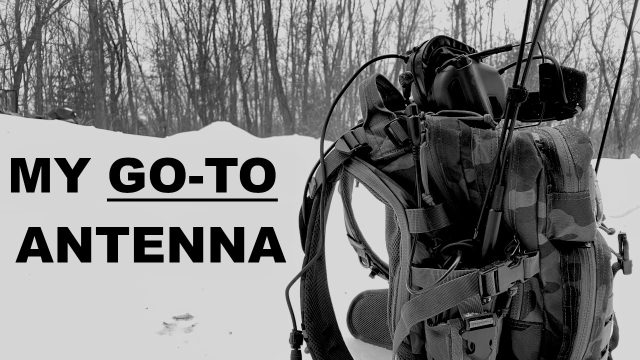
I use pre-made antennas purchased online and mount them using an NMO, New Motorola, mount system. These allow you to screw in tuned antennas designed for specific frequency bands.
For my base setup, I run a reasonably priced dual-band antenna on the roof connected to a mobile unit.
You don’t need to overcomplicate it.
In emergencies, simple wins.
My Biggest Takeaway
You can go down the radio rabbit hole if you want.
You can get technical.
You can get nerdy.
But in an emergency, what matters most is this:
- Pick a channel.
- Pick a privacy code.
- Program every radio the same.
- Keep it simple.
That’s it.
That simplicity allowed us to move efficiently, stay coordinated, and operate safely in a real disaster zone.
And that’s why I believe GMRS is one of the best entry-level emergency communication solutions available today.
If you’re building your own emergency communication plan, start simple. Master the basics. Then expand as needed.