CALEA: The Government’s Smartphone Spy Program
Digital privacy is a human right, yet in today’s world, it’s under constant pressure from government surveillance programs. One of the most powerful tools for surveillance in the United States is the Communications Assistance for Law Enforcement Act, better known as CALEA. Even if you’re not a tech expert, it’s important to understand what CALEA is, how it works, and how it can impact your personal privacy.
What is CALEA?
CALEA is a U.S. federal law enacted in 1994. Its primary goal is to ensure that law enforcement agencies can conduct lawful surveillance on telephone and internet communications when authorized by court orders. In practice, CALEA requires telecommunications companies to build their networks in a way that makes it technically possible for the government to intercept calls, messages, and other communications.
Although CALEA was initially designed for traditional phone systems, its scope now includes mobile phones, internet traffic, and other modern communication systems. Essentially, it mandates that telecom providers make it possible for law enforcement to monitor communications in real-time.
During my time working as a wireless data engineer for a major cell phone provider, I had a rare behind-the-scenes look at how government surveillance is implemented. I was shown the CALEA equipment housed in the company’s data centers, and I learned that, in practice, it is often used routinely without court orders.
History of CALEA
CALEA was passed during the rise of digital and mobile communications. In the early 1990s, law enforcement worried that new technologies,like digital phones and eventually the internet,would make it impossible for them to wiretap communications. Congress passed CALEA to close that gap, forcing telecom companies to design their networks with surveillance in mind.
Over time, CALEA has expanded. Originally focused on landlines, it now covers cell phones, VOIP calls, and internet communications, essentially requiring service providers to leave backdoors in their infrastructure for government monitoring.
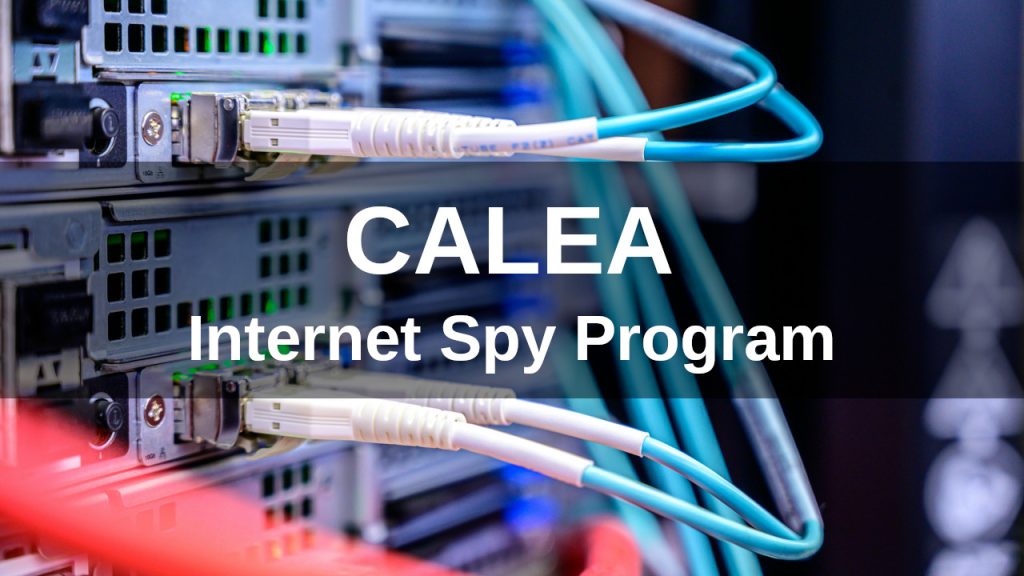
The setup for the cell service provider that I worked at was designed for full, unrestricted government access, with servers directly connected to monitoring ports on the Cisco network core in both the Virginia and West Virginia data centers.
How CALEA Can Be Abused
While CALEA is intended for lawful surveillance with court authorization, it can,and has,been abused. From my personal experience working as a wireless data engineer for a cell phone provider, I saw firsthand how these systems could be misused.
I was shown the CALEA equipment in the data center, and I was told that government access was often routine and unrestricted, even without court orders. The servers were connected to monitoring ports on the CISCO network core in our Virginia and West Virginia data centers, meaning that law enforcement could theoretically tap into massive amounts of data at any time without triggering alerts.
This kind of unrestricted access raises serious privacy concerns, as it allows for surveillance without oversight or accountability.
What Data CALEA Can Collect
CALEA-enabled systems can capture almost everything you do on a phone or internet-connected device, including your home computers, laptops, tablets and anything connected to your WiFi.
Some examples include:
- Phone calls – both metadata (who you called, when, for how long) and content (actual conversations).
- Text messages (SMS/MMS) – the content of messages, sender and recipient information, and timestamps.
- Internet activity – including emails, web browsing history, and VOIP communications.
- Server metadata – which applications you use, when you log in, and network details.
- Location data – your approximate or exact location based on cell tower connections.
In short, CALEA-enabled networks have the potential to provide a complete picture of your digital life.
How to Safeguard Against CALEA
Although CALEA backdoors exist in telecom networks, there are steps you can take to protect your privacy:
- Use end-to-end encrypted messaging apps – Apps like Signal or WhatsApp encrypt messages so even if the network is tapped, the content remains unreadable.
- Use encrypted voice and video calls – Some apps encrypt call data so that even intercepted calls cannot be understood.
- Be cautious with metadata – Even if your messages are encrypted, metadata (who you communicate with, when, and how often) can still be collected. Using tools that minimize metadata leakage can help.
- Consider VPNs for internet activity – A Virtual Private Network can mask your IP address and encrypt internet traffic, reducing the risk of monitoring.
- Limit sensitive communications on networks you don’t trust – If possible, use networks where you have more control over security.
Final Thoughts
CALEA shows the tension between government surveillance powers and individual privacy rights. While intended for national security and law enforcement purposes, the reality,especially as I observed working inside a data center,is that CALEA can be used routinely without oversight.
Understanding how CALEA works is the first step toward protecting yourself. By using encryption, carefully choosing apps, and being mindful of metadata, individuals can reclaim some privacy even in a world where surveillance is built into the network.
Privacy is not just a preference,it’s a fundamental human right. And awareness is the first line of defense.