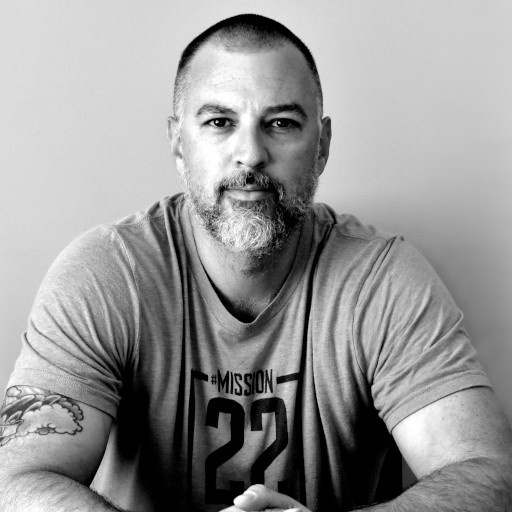
James Burnett is a prior U.S. Army National Guard Radio Operator, a prepper, and an advocate for self-reliance and personal freedom.
James grew up in northern Vermont, where life demanded self-sufficiency from an early age — chopping wood for heat and tending gardens for food. Those early lessons in hard work and resourcefulness would go on to shape the course of his life.
In 2003, James joined the Army National Guard, completing basic training at Fort Benning and earning his 31C Radio Operator MOS at Fort Gordon. He trained on the Force Battle Command Brigade and Below (FBCB2) system, served in a Tactical Operations Center at the brigade level, and supported patrol and Quick Reaction Force radio operations while attached to an MP company. He deployed to Iraq in 2008 and 2009 with an expeditionary signal battalion, operating communications in a combat environment and supporting network security infrastructure across NIPRNet and SIPRNet.
Since then, James has lived through a string of real-world crises that tested his skills and shaped his mindset: a week-long power outage after Virginia’s 2012 derecho, a humanitarian trip to Haiti that exposed the dangers of unchecked government control, the fuel shortages of the Colonial Pipeline hack, and the devastation of Hurricane Helene in Tennessee and North Carolina — where he fielded GMRS radios with a small team to locate family and helped run a medical aid station for storm survivors. He has also stood up to government overreach firsthand, successfully fighting a local ordinance that threatened to criminalize his backyard chickens.
When Virginia lawmakers moved to ban AR-15 and AK-47 style firearms — with no grandfather clause, making even possession illegal — James took action. He helped start a patriot movement in Augusta County, Virginia, rallying over 2,800 citizens to show up and pass a Second Amendment Sanctuary resolution in defense of their constitutional rights.
These experiences have convinced James that freedom isn’t free — it has to be protected, practiced, and prepared for. Today, he lives in a log cabin, where he continues building the skills and resources needed to survive any SHTF event, and to help others do the same.